
- Introduction
- What is the JLPT N3 test format?
- How should you study N3 grammar?
- How much vocabulary do you need for JLPT N3?
- How many kanji do you need for JLPT N3?
- How can you improve your listening for JLPT N3?
- How can you improve your reading comprehension for JLPT N3?
- Why should you take JLPT N3 practice tests?
- How should you plan a JLPT N3 study schedule?
- How do you stay motivated for JLPT N3?
- Conclusion
Introduction
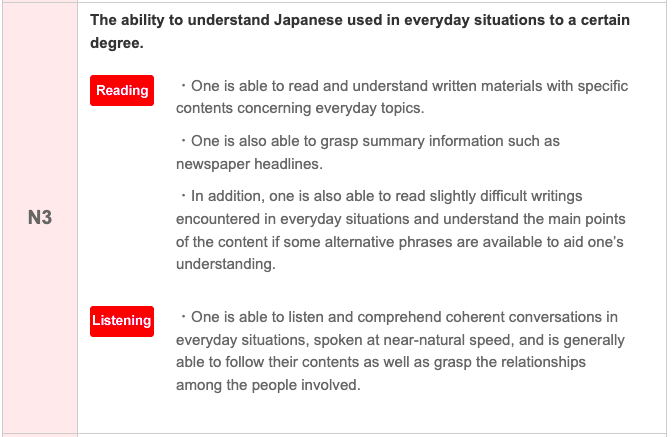
The Japanese Language Proficiency Test (JLPT) N3 marks the transition from beginner to intermediate Japanese language skills. As you prepare for the N3 exam, you’ll need to build on the foundations established at the N4 level while further developing your grammar, vocabulary, kanji, listening, and reading comprehension skills.
- JLPT N3 marks the transition from beginner to intermediate Japanese. It builds on N4 with more grammar, vocabulary, kanji, listening, and reading comprehension.
- The JLPT N3 covers Language Knowledge (vocabulary and grammar), Reading, and Listening. Each section is timed, so time management matters on test day.
- Study N3 grammar with intermediate textbooks, and grow your N3 vocabulary and kanji with flashcards, apps, and Japanese media at your level.
- Build JLPT N3 listening and reading with level-appropriate podcasts, TV shows, and texts such as NHK News Web Easy. Taking notes and reading out loud keep you actively engaged.
- Take JLPT N3 practice tests regularly to learn the question types and find weak areas, and follow a daily study schedule with realistic goals for your exam date.
What is the JLPT N3 test format?
The JLPT N3 test format consists of three sections: Language Knowledge (vocabulary and grammar), Reading, and Listening. Each section is timed, so begin by familiarizing yourself with the format; efficient time management is crucial during the test.
How should you study N3 grammar?
To study N3 grammar, keep working with intermediate material, because the JLPT N3 tests your understanding of intermediate Japanese grammar. Continue using intermediate textbooks such as “An Integrated Approach to Intermediate Japanese” and “Tobira.”
How much vocabulary do you need for JLPT N3?
The JLPT does not publish an official vocabulary list for N3, but a common study target is about 3,000 words. Utilize flashcards and language apps like “IPPO” and “Anki” to study new words. Reinforce your learning by consuming Japanese media, such as novels, movies, and TV shows, that are suitable for your language level.
How many kanji do you need for JLPT N3?
The JLPT does not publish an official kanji list for N3, but a common study target is around 650 kanji.
How can you improve your listening for JLPT N3?
To improve your listening for the JLPT N3, expose yourself to a variety of Japanese audio materials, such as podcasts, TV shows, and movies, tailored to your language level. Listening skills are essential for the JLPT N3. Websites like “IPPO” offer N3-specific listening practice. Take notes and summarize what you hear to actively engage with the content.
How can you improve your reading comprehension for JLPT N3?
To improve your reading comprehension for the JLPT N3, read level-appropriate texts, such as novels, essays, and news articles, on a regular basis. Practice reading out loud to improve your pronunciation and fluency, and use online resources like “NHK News Web Easy” and “IPPO” for additional content.
Why should you take JLPT N3 practice tests?
JLPT N3 practice tests familiarize you with the test format and question types. Taking them regularly helps you gauge your progress and identify areas where you need to focus your studies. Use resources like the official JLPT website or “IPPO” for practice tests and answer explanations.
How should you plan a JLPT N3 study schedule?
A good JLPT N3 study schedule is consistent and gives daily practice time to grammar, vocabulary, kanji, listening, and reading comprehension. Set realistic goals based on your desired exam date and adjust your schedule as needed.
How do you stay motivated for JLPT N3?
To stay motivated for the JLPT N3, set clear objectives, track your progress, and celebrate your accomplishments. Motivation is essential for achieving success on the exam. Connect with other Japanese learners, join study groups, or participate in language exchange programs to keep yourself engaged and motivated. You can use “Hello Talk” to motivate yourself.
Conclusion
Passing the JLPT N3 is a significant milestone in your Japanese language learning journey. By understanding the test format, deepening your knowledge of grammar, growing your vocabulary, learning more kanji, and honing your listening and reading skills, you can achieve success on the N3 exam. As you progress through the JLPT levels, the skills and confidence you gain from passing the N3 exam will serve as a robust foundation for tackling more advanced Japanese language studies. Stay committed, enjoy the learning process, and embrace the challenges that come with mastering a new language. With perseverance, dedication, and a positive attitude, you’ll be well-equipped to conquer the JLPT N3 and continue your journey toward Japanese language proficiency. Good luck, and happy studying!

We offer the Best Online Japanese Learning (All Free), and our goal is to facilitate the adoption into life in Japan. Our service “IPPO” is made by native Japanese teachers and professionals. The tips we share with you can help you to learn Japanese efficiently and pass JLPT (Japanese Language Proficiency Test).